
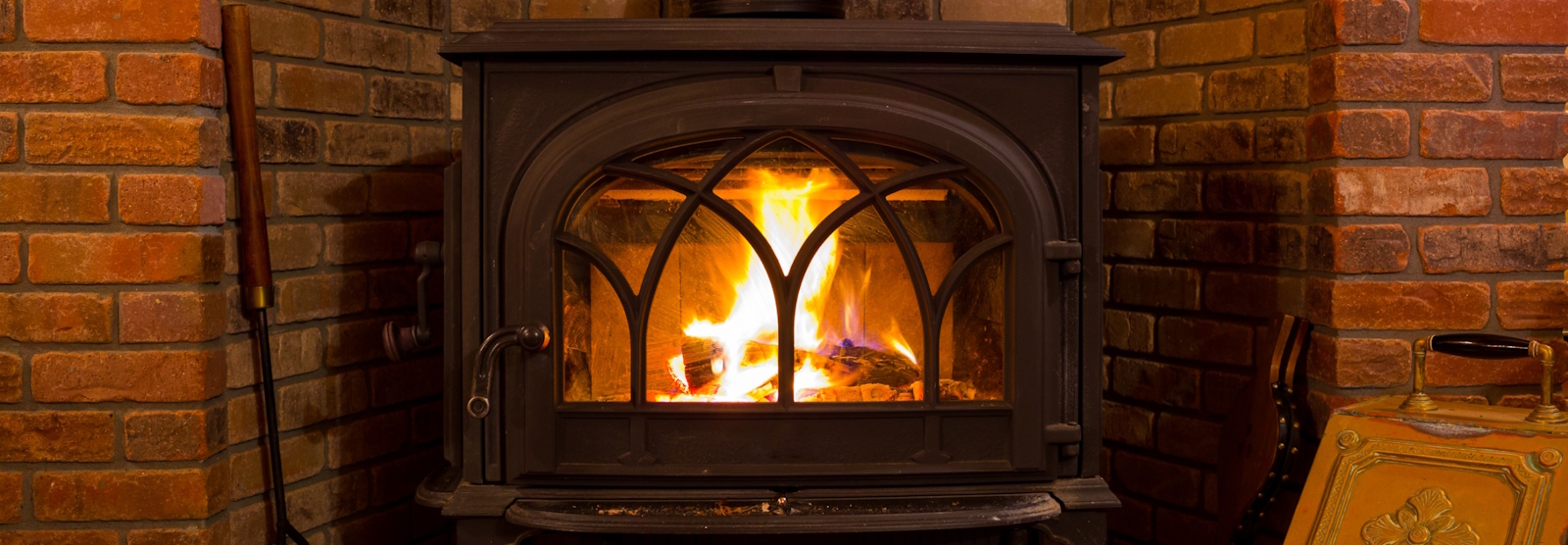
Log stoves
Log stoves
Many people burn wood in stoves as a supplement to their main heating system, but new biomass boilers offer a viable alternative for off-grid properties.
Biomass is a renewable energy source, generated from organic matter, this could be wood or specialist plants. It releases carbon dioxide when burned, but considerably less than fossil fuels. Biomass comes in a variety of forms: logs, chips, pellets and can be used for heating individual rooms or for a whole house.
According to EST a wood-fuelled biomass boiler could save you up to £1,100 a year compared to an old electric heating system.
Log burning stoves
Make sure you have a good quality log stove. A closed log stove is much more efficient than an open fire.
Make sure your wood is dry (less than 20% moisture content) as wet wood burns very inefficiently and produces lots of harmful particulates.
Keep the fire hot, don’t allow it to smoulder, this builds up soot in the chimney, creates more air pollution and burns very inefficiently
Be aware of the cost of logs. If you buy logs retail, a dumpy bag of logs for £50 works out at around 5p-8p/kWh, which is hardly less than the price of gas or oil (the real cost of the heat depends a great deal on how efficient your log stove is, these costs are for one that is relatively efficient).
If you have a log stove in any room, there must also be an air vent in the room to let in combustion air, unless the stove has its own ducting to bring in combustion air (rare).
If you are buying a new stove then check local planning conditions, buy an efficient model (they all carry energy ratings) and also install a dedicated air duct direct into the stove (this avoids having an uncontrolled air vent in your wall and also using warmed air for combustion).