
Solar

Solar
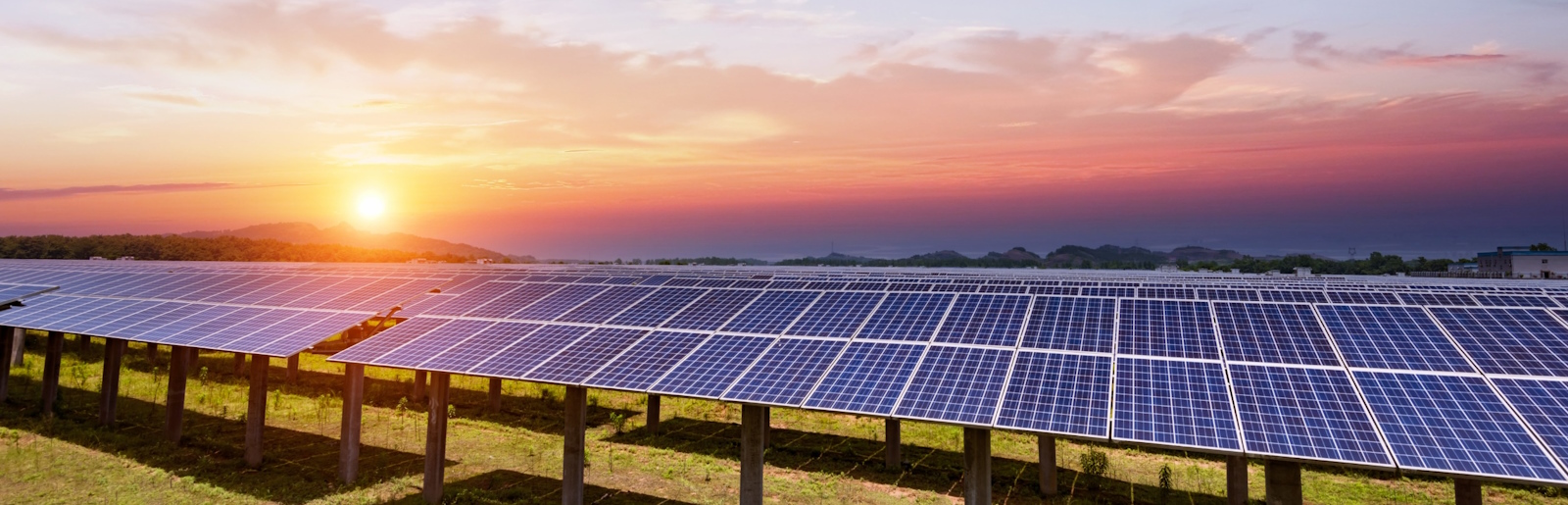
There are no longer any subsidies for installing solar PV panels, but they can be a good investment even without subsidy.
The rule of thumb is that if you have a good south facing roof and are likely to use a high proportion of the PV electricity generated on-site, then PV panels are probably a good investment. If you are unlikely to use much of the electricity generated (e.g. the house is unoccupied during the day with everyone out at work) then solar PV panels would be a poor investment unless coupled with some storage.
A typical domestic installation would be about 4 kWp. This would occupy an area of about 25 square metres and would generate just under 4,000 kWh per year of electricity. Any that you can use on site would be worth about 35p/kWh to you (to displace your use of grid electricity). Any that you don’t use would be exported to the grid and your electricity supplier might give you about 5p/kWh for it (this is via the SEG or Smart Energy Guarantee, different suppliers offer different prices).
More information on SEG can be found at: https://www.ofgem.gov.uk/environmental-and-social-schemes/smart-export-guarantee-seg
Solar Hot Water
Solar thermal panels are good for providing hot water. However, prices for solar thermal panels have not fallen in cost as rapidly as solar PV panels, so if you have only limited roof space, we would recommend focusing on putting as much solar PV as you can afford on the roof. If you have surplus roof space, and use a lot of hot water it might be worth installing solar thermal.
You can always use your solar PV panels for creating hot water. You can install a device that detects whether your PV panels are exporting power to the grid, and if so, can divert it to your hot water tank, effectively heating your water at the price you would have received for the exported power (free if you are on FIT, the value of the SEG, typically about 5p/kWh if installed post FiT). See https://myenergi.com/product/eddi/ or the Immersun https://www.immersun.co.uk/all-products/immersun.
Batteries
The finance and payback of batteries fairly simple to calculate and we offer the following to help you to make this decision.
The most important bits of data you should consider about a battery system would be the capacity, which would be measured in kWh, and the length of the guarantee. We would recommend basing your payback calculation only on the length of the guarantee as you cannot be sure it will be maintainable beyond this. Guarantee periods are typically 10 years.
Suppose you have a battery with 1 kWh of capacity. If your solar panels are generating excess beyond what you use at the time, you could store 1 kWh each day, for use in the evening when the sun has gone down. This will save you about 30p (at current prices) because you will need to buy 1 kWh less from the grid. If you are on FIT, you are on “deemed export” so don’t get paid any less if you consume more of your PV generated electricity on-site, so it won’t change what you get paid for export. If you installed the panels post-FIT, you will be on the SEG (Smart Export Guarantee), so will get about 5p/kWh for exported power, so will lose this for the 1 kWh you stored in the battery.
So in real terms, your saving per day per kWh of capacity is 30p if you are on FIT, or 25p if your panels are post-FIT.
You won’t be able to store a kWh of power every day of the year, in the winter the sun may not be shining. It is hard to estimate how many days you will be able to charge it fully, and would depend on how big your batter capacity is, but suppose for example that your panels managed to charge your battery on ¾ of the days in the year (273 days) it would save you £81/year (£68 per year if post FIT).
Over 10 years, the savings are therefore £810 or £680 resp.
Battery installation seems to be around £500/kWh at present so on these figures would seem to be viable. Note that if we returned to the prices of 6 months ago (20p/kWh import, 5p SEG) the value of each kWh is only 15p if your panels are post FIT, so the annual value is about £40/kWh, or £400 over 10 years, so would not give you a positive return.
These figures suggest that if electricity prices do stay high in the long term, a battery would be a good investment but if prices return to more like 20p/kWh the return would be marginal.